Giving Your Child the Best Possible Start
Every parent wants the same thing: a healthy, thriving child. But in a world full of advice, interventions, and well-meaning opinions, it can be hard to know how to best support your little one — especially when something feels off and you can’t quite put your finger on why.
At Move Mountains Chiropractic in Little River, SC, we believe that God made the body to heal — including your child’s body. Our role is simply to remove the interference that keeps that healing from happening. Dr. Pam Voss has dedicated her practice to caring for infants, toddlers, and children, and she considers it one of the greatest privileges of her work.
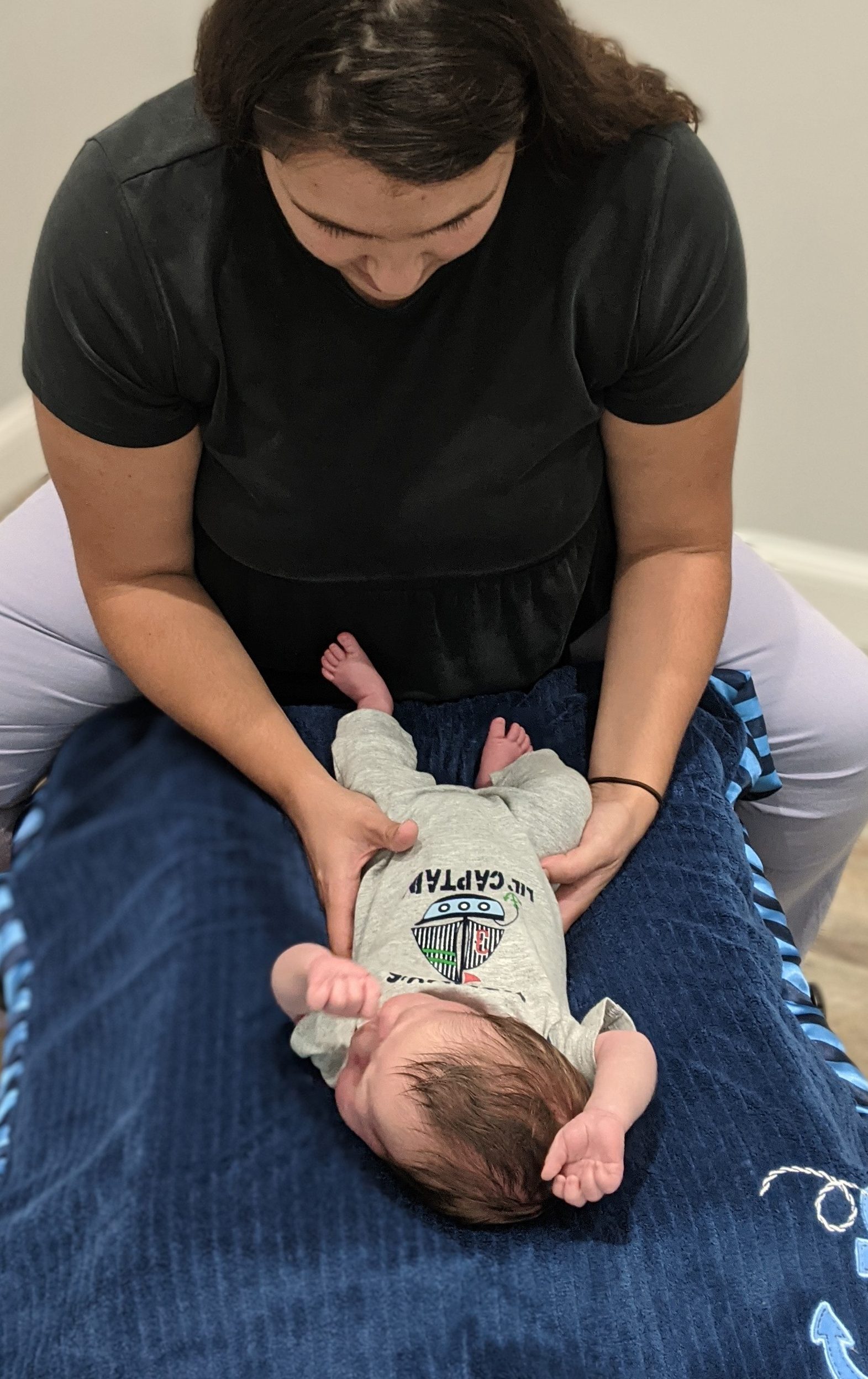
Chiropractic care for children looks nothing like what most adults imagine. There are no dramatic cracking adjustments, no discomfort, and no fear. What there is, typically, is a sleepy baby, a calmer toddler, and a relieved parent.
Why Children Need Chiropractic Care
Most people associate chiropractic care with adult back pain. But the truth is, the need for spinal and nervous system support often begins before a child ever takes their first step — sometimes before they take their first breath.
The birth process, even an uncomplicated vaginal delivery, places significant compressive and rotational force on a baby’s head, neck, and upper spine. C-sections, vacuum delivery, forceps use, prolonged labor, or a rapid delivery can add layers of stress to an already challenging transition. These forces can cause subtle misalignments in the upper cervical spine that interfere with the nervous system’s ability to regulate the body’s most basic functions.
The nervous system controls everything — digestion, sleep, immune function, muscle tone, and the body’s ability to adapt to its environment. When that system is under stress from the very beginning of life, common childhood struggles can emerge:
- Colic and excessive crying — often rooted in tension in the upper cervical spine affecting the vagus nerve, which controls digestion and calming
- Reflux and spitting up — poor nervous system regulation of the digestive system
- Difficulty latching or nursing asymmetrically — often caused by tension in the neck and jaw from the birth process
- Torticollis — a tilt or rotation of the head that makes turning to one side difficult or painful
- Ear infections — tension in the upper cervical spine can impair drainage of the Eustachian tubes, creating an environment where fluid builds up and infection follows
- Sleep disturbances — a dysregulated nervous system makes it hard for babies and toddlers to settle and stay asleep
- Constipation and digestive discomfort — the nervous system regulates the entire gut; interference can slow or disrupt normal function
- Plagiocephaly (flat head syndrome) — often accompanied by torticollis; can be addressed with gentle adjustments alongside repositioning strategies
As children grow, chiropractic care continues to be valuable through the bumps, falls, and physical adventures of childhood — supporting healthy growth, immune resilience, and a nervous system that can adapt and thrive.

Is Chiropractic Care Safe for Babies and Children?
Yes — when performed by a trained pediatric chiropractor, chiropractic care is extremely safe for children of all ages, including newborns.
Adjustments for infants use no more pressure than you would use to check the ripeness of a tomato. There are no audible pops or cracks. The techniques Dr. Pam uses with newborns and young children are gentle, specific, and adapted completely to the size and development of the child.
Dr. Pam has completed extensive continuing education in pediatric chiropractic technique through the International Chiropractic Pediatric Association (ICPA). She has worked with hundreds of infants and children and approaches each one with the patience, gentleness, and expertise that tiny patients deserve.
Many parents tell us they are surprised by how calm their baby is during the adjustment — and even more surprised by what they see in the hours and days afterward.
What Conditions Can Pediatric Chiropractic Help?
Beyond the newborn period, chiropractic care supports children through many of the challenges that come with growing up:
For infants and toddlers:
- Colic, reflux, and digestive discomfort
- Difficulty breastfeeding or nursing
- Torticollis and head tilt
- Plagiocephaly (positional flat head)
- Chronic ear infections
- Sleep difficulties
- Immune system support
For older children:
- Growing pains
- Postural concerns from heavy backpacks or increased screen time
- Sports injuries and growing pains
- Headaches and migraines
- Bed-wetting (enuresis) — the nervous system controls bladder function; many families are surprised by this connection
- Attention and focus concerns — a regulated nervous system supports a child’s ability to concentrate and learn
- Anxiety — chiropractic care helps shift the nervous system out of a chronic fight-or-flight state, which many anxious children are stuck in
We want to be honest with you: chiropractic care is not a cure for any condition, and we never promise specific outcomes. What we can tell you is that a nervous system that is free of interference is better equipped to regulate the body, adapt to stress, and heal. That is true at every age — including yours.

A Place Where Families Belong
Our office in Little River is built for families. There is space for little ones to move around, for siblings to play while one child is being adjusted, and for moms to catch their breath in a warm, judgment-free environment. On any given morning, you might find a newborn, a toddler, a school-age child, a pregnant mama, and a grandparent all being cared for in the same hour.
Dr. Pam is a mother of four. She knows what it takes to get children to appointments, to advocate for your child when something feels wrong, and to trust another person with the care of your most precious people. That understanding shapes everything about how she practices.
We also work closely with the broader Little River and North Myrtle Beach community — partnering with midwives, lactation consultants, pediatricians, and other holistic practitioners so that your family has a full village of support around them.
When Should My Baby Have Their First Adjustment?
We recommend a check within the first few weeks of life — ideally in the first days, if possible. Even babies born without obvious complications benefit from having their spine and nervous system evaluated early, before tension patterns become established.
That said, it is never too late to start. We have worked with children of all ages and stages, including older kids and teens who were never checked as infants. Every visit begins with a thorough consultation and gentle assessment, so Dr. Pam fully understands your child’s history before any care begins.

Ready to Book Your Child’s First Visit?
You know your child better than anyone. If something has felt off — if they seem uncomfortable, colicky, unsettled, or not quite thriving the way you hoped — trust that instinct and let us take a look.
A healthy nervous system gives your child the foundation they need to grow, learn, play, and become everything God created them to be.
Move Mountains Chiropractic is located at 440 Hwy 90 E, Suite 4, Little River, SC 29566. Call us at (843) 663-0274 or schedule your child’s first visit online using the button above.
We serve families throughout Little River, North Myrtle Beach, Myrtle Beach, Conway, Loris, and the surrounding Grand Strand community.
FAQs
From birth. Newborn adjustments are extremely gentle — no more pressure than a soft touch — and are safe from day one. Many of our patients bring their babies in within the first week of life.
The birth process — even a smooth one — places significant compressive force on a baby’s head, neck, and upper spine. Checking for tension patterns in those first days, before they become established, is one of the most valuable things you can do for your newborn. We welcome babies from day one.
Yes — newborn adjustments are among the gentlest things we do in this office. The pressure used is comparable to the light touch you’d use to check if a peach is ripe. There are no pops, no cracks, and no twisting. Our doctor has adjusted hundreds of newborns and approaches each one with the patience and precision that tiny bodies require. Many babies sleep right through it.
The first visit always starts with a conversation. Dr. Pam will sit with you and ask about your child’s birth history, any symptoms or concerns you’ve noticed, and what you’re hoping chiropractic care might help with. She’ll then perform a gentle hands-on assessment — checking the alignment and movement of the spine, looking for areas of tension, and evaluating how the nervous system is adapting. If she finds areas to address, she’ll explain what she’s seeing and what she recommends before doing anything. Nothing happens without your understanding and consent.
It might be. Asymmetrical nursing — where a baby feeds comfortably on one breast but struggles or refuses the other — is often caused by tension in the neck and upper spine that makes rotating the head in one direction painful or uncomfortable. The same tension can affect jaw mobility and make a deep latch difficult even on the “easy” side. Many lactation consultants refer babies to us specifically for this reason. A gentle assessment of the cervical spine and jaw is often the missing piece that makes breastfeeding click.
Yes — and ideally before and after the procedure. Oral ties are frequently accompanied by tension in the neck, jaw, and base of the skull that develops in utero or during birth. Releasing the tie without addressing that underlying tension can limit how fully the baby is able to use their new range of motion. Many of our families work with us alongside their IBCLC and oral tie provider for the best possible outcome.
That’s called torticollis — a tightening of the sternocleidomastoid muscle on one side of the neck that causes the head to tilt or rotate preferentially in one direction. It’s extremely common and almost always has its roots in the birth process — a baby who was positioned asymmetrically in the womb, or whose head was rotated during delivery, can emerge with significant tension on one side of the neck. Left unaddressed, torticollis leads to feeding difficulties, plagiocephaly (flat spots on the head), and developmental delays as the baby favors one side. Gentle chiropractic adjustments to release the tension, combined with home stretching guidance, resolve most cases of torticollis beautifully when caught early.
Positional plagiocephaly — flat spots caused by a baby consistently resting on one side of their head — almost always accompanies torticollis. The baby can’t turn comfortably, so they rest on the side that’s easier, and over time the soft skull flattens in that spot. Addressing the underlying cervical tension with chiropractic care, combined with repositioning strategies and tummy time guidance, is often highly effective. The earlier you address it, the better — skull bones are most responsive in the first four to six months of life.
Sleep struggles in infants and toddlers are frequently rooted in nervous system dysregulation. A baby whose nervous system is stuck in a state of chronic stress — fight-or-flight mode — simply cannot relax into deep, restorative sleep. They may wake frequently, have difficulty settling, or seem uncomfortable no matter what position you put them in. Chiropractic care helps shift the nervous system toward a parasympathetic (rest-and-digest) state, which is the state in which sleep happens. Many parents tell us that improved sleep is one of the first changes they notice after their child begins care — sometimes after the very first adjustment.
It depends entirely on your child’s history, the complexity of what we find, and how their body responds to care. Acute issues in young babies — uncomplicated torticollis, mild reflux — often respond in just a few visits. Children with more chronic patterns, or older kids with longstanding tension, may need more time. Dr. Pam will give you a realistic recommendation after the first assessment, and we will reassess regularly so you always know where you stand.
Almost every child who comes in nervous leaves comfortable — and many leave asking when they can come back. Dr. Pam has a way of working with the kids. There is no rushing, no pressure, and no doing anything your child isn’t ready for. We’ll take it at whatever speed your child needs.
No referral is needed. You can schedule directly through our website or by calling the office. That said, many of our families are referred by their pediatricians, midwives, lactation consultants, and ENT specialists who have seen the results firsthand. We are always happy to collaborate with your child’s care team.
We are a cash-based office therefore we do not accept insurance. We do offer payment plans.